Matti Korhonen
I make pro goalies and take pros to the next level.
A summary of my playing and coaching background
I have played in some of the best and worst juniors leagues in Finland and North America. Made it onto University hockey team with full scholarship as a walk-on goalie in Canada and eventually got paid to play in Netherlands. I made my last comeback at the age of 30 to see what could me my maximum and worked my way to become #4 in the second highest pro league in Finland.
I started coaching on the side of my own playing career back in 2003 and had my first own camp in 2005. I have worked with goalies from youth to NHL all over the world during the past 20+ years. I know what you have to do to make it pro and how take your game to the next level as pro.
Scroll down for more detailed story.
My Highlight Videos

Lakehead Thunderwolves
This video is from a 2006–2007 season practice game, and soon after this game, I was offered a spot on the team with a full scholarship.
Before this I had been without a team a year and trained by myself. Last league where I played was the worst junior league in the U.S. and my current University team mates came from major junior, BCHL, USHL, etc. My story how I got here is like a combination of Rocky I and Mark Wahlberg’s football movie Invincible… Sometimes miracles happen in real life too when you keep working for the dream and don’t give up.
After the season, a new coach came in, brought in an NHL-drafted goalie, and when I came back in the fall at the first meeting with a new coach, he told me that I needed to try out again for the team, and if I made it, I would not get a scholarship or playing time.
Roki Rebels
This video is from 2016-2017 season (2-division, Finland 4) and one of the most memorable games I have had in my career because of the journey I had taken to get there and opponent team had 1-2 lines of real pro level guys. 60 saves is a career high for me and to win this one felt amazing.
My Playing Background
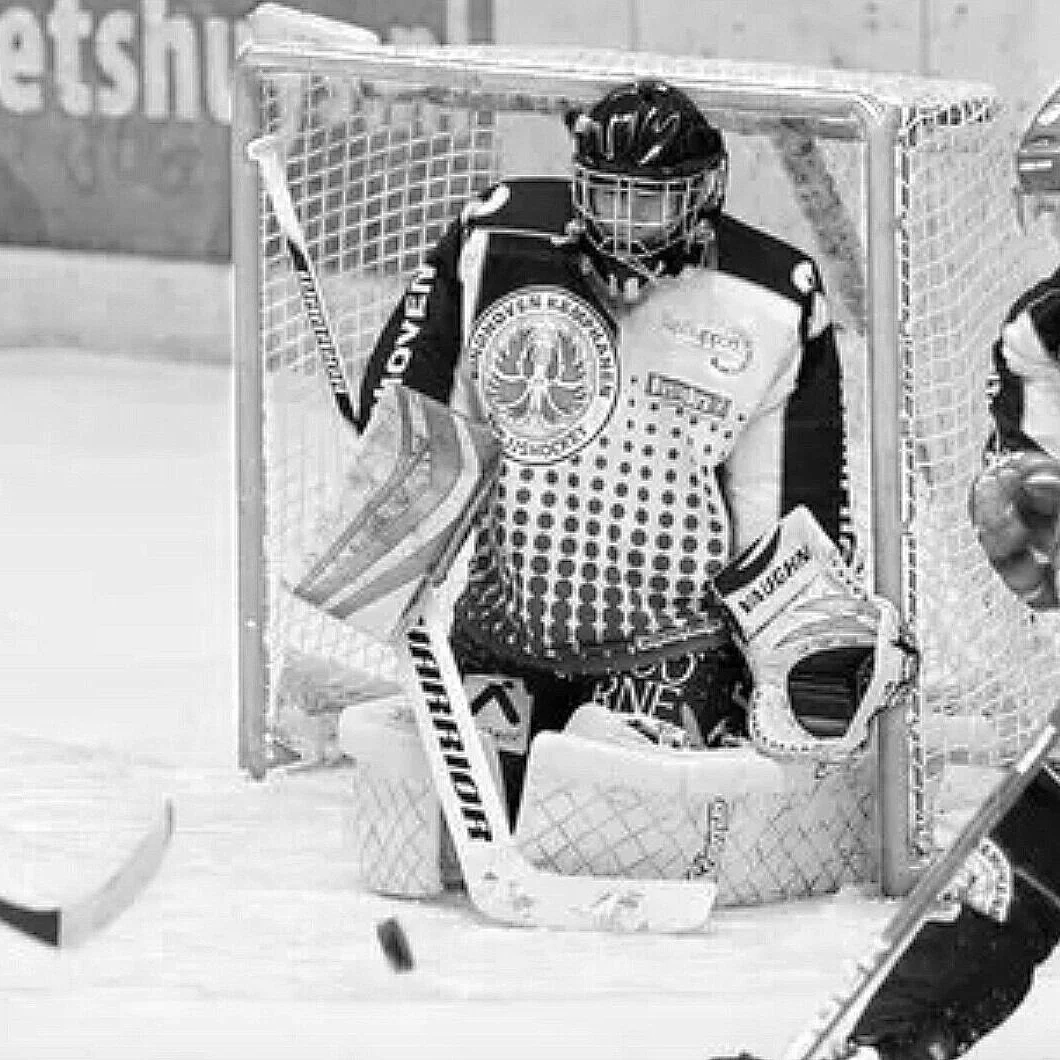
My Elite prospects stats (not accurate):
LEAGUES AND TEAMS
Professional & University Hockey
Mestis, Finland 2: Roki (#4 goalie, back up at games), KooKoo (occasional morning ice practice goalies)
Eredivisie, Netherland 1: Eindhoven Kemphanen (Player-coach for goalies)
SPHL: Knoxville Ice Bears (One practice game)
FHL: Danbury Titans (Invitation only rookie camp)
MAHL:Valley Forge Freedom (Signed contract but never played)
U sports, Canadien University hockey: Lakehead University Thunderwolves
Semi-pro & Competitive Minor Hockey
Suomi-Sarja, Finland 3: Lohjan Ankat & Kirkkonummen Salamat
Division 2, Finland 4: Kirkkonummen Salamat, Roki Rebels & Kemin Lämärit
Division 3, Finland 5: KiPS, Tuuski & Kirkkonummen Salamat
Junior & High School Hockey
Junior A / U20: Traverse City Enforcers, KooKoo U20, Fairbanks Ice Dogs
Junior B / U20: Kootenai Colts, Wisconsin Mustangs
Junior C / U20: Tampa Bay Sandsharks
Minnesota High School Hockey: Grand Rapids High School Varsity
U16-U18: Valki U16 SM and U18 Mestis
U5-U15: Valki (Valkealan Kiekko)
ACHIEVEMENTS AND AWARDS
Team achievements and championships
1st place, Iron Range Conference Champions - Minnesota Boys High School Hockey
1st place, U15 Eastern Finland Providence Championship
1st place U11 & U14 Kymi-Saimaa Regional Champions, Finland
1st place, SEJHL Junior C league Championship
2nd place, U12 Kymi-Saimaa Regionals, Finland
3rd Place, USA Junior C (U20) National Championship Tournament
3rd Place, Finland U20 Suomi-Sarja (Finland 3)
U10-U16 youth tournament championships
Personal Awards and Recognitions
Pohjola-Leiri - Eastern Finland providence team
U16 national team scouting camp - invitation only Finnish Hockey Federation camp
Iron Range Conference second all-stars team, Minnesota High School Hockey
All-state goalies’ honor roll - Minnesota High School
Great 8 All-Stars Tournament - Minnesota High School hockey
Chicago Showcase Minnesota team alternative goalie
First All-stars team - SEJHL
USA Junior C National All-stars tournament - SEJHL All-stars team
The best goalie of the league - SEJHL
The best player of the game, the best goalie of the tournament awards and youth organization banquet awards
A SHORT STORY BEHIND STATS
I started playing hockey at the age of five as a skater but I always dreamed of being goalie. I was eleven when I finally got to play goalie as the results of one of the two goalies quitting in my team (in the early 90’s we didn’t have everyone gets to try to be a goalie and the team would carry only two goalies). As a skater I wasn’t that good but when I got to be a goalie, I quickly became one of the best goalies in my age group in Finland. A big thanks to my success belongs to Jaakko Munnukka who was my first goalie coach in the first season when I started playing. His teachings carried me over many years to come. After him Ari Ahlberg took over the coaching and continued the development. My team won many championships and we were one of the best youth hockey teams in the country me being our started for 80-90% of the games.
I was in the U16 national team scouting group and at few scouting tournaments/camps but I wasn’t good enough to make the junior national team. Also, after totally failing at Pohjola-Leiri for trying too much I couldn’t handle pressure situations anymore which led me to study mental side of the game and physical preparation. Out of that came my own “In The Zone” preparation routine that has been used to win NCAA and world championships by goalies I have worked with. From age of 15 to 17 I was overtraining and my central nervous system was totally messed up which I didn’t realise at the time. That is why 2000-01 season was the worst when I couldn’t stop even a beach ball. But the next season was totally opposite.
In the summer of 2001, I went to Minnesota to be a foreign exchange student for the full year. For the 01-02 season, I made many changes in my life such as starting yoga, meditation, and sleeping during school at study hall (study hall is a one-hour class where you are quiet and just do your homework, which was a great time to sleep). Because in the U.S. you are allowed to bring your own food to school and you have a locker where to keep it, my food intake almost doubled. I was also able to eat a lot more and more nutritious food than before because In Finland, we have free school lunch but it is just plain tasting carbs. And we were not allowed to bring our own food to school but anyway I would not have even know what I’d need to do from nutrition stand point at the time. So, when I went from not eating much during the day to eating two meals during the day, it had a huge impact on my recovery and one of the main reasons I could turn around my performance. I had more energy to train, better focus during games and I was sleeping better and more just due to eating more. All this allowed my body to perform at the level it could. My game preparation routine also allowed me to over come collapsing in the big games and now I was able to play on top of my game in big games. For example, here is a quick story: We hadn’t won Greenway in 7 years, 3000+ spectators in the fully packed rink, opponent had two NHL drafted players and the best goalie of the state tournament past year, the first shot over the goal rolled from my glove to the net but I was able to recover myself from that and had one of the best games in my life. We won 3-4 on over time.
That first season in Minnesota wasn’t easy but I had one of the best, most fun and the most memorable years in my life on and off the ice. Coaches from schools like UMD (Minnesota Duluth) came to see me play and after the season all the top junior teams were interested in me. Basically eating and sleeping more and recovering better from training took my game to a whole new level. I went from not catching anything to one of the best goalies in Minnesota High School Hockey.
That 01-02 was also an amazing year since I had a very special coach-goalie relationship with my coach. I’d say that as a person, Dan Clafton is one of the best coaches in the world and a unique character you don’t come across often. I was one of his last students before he retired from coaching. He was like my Mr. Miyagi (Sensei from Karate Kid) and influenced my coaching style a lot. He could be yelling at my face and throwing the stick to the boards when I was scored on or not giving 100% effort, but we both knew it was to make me better, and all the hardship came from a place of love and care. The way we worked together was what you see in movies like Rocky.
After 2001-02 season I was three weeks home and went straight back to the U.S. to play junior hockey. But I wasn’t prepared for it. As an import goalie it is not enough that you are as good as or slightly better than local goalies. You have to be so good that the team wants to keep you over an import skater who’d be scoring at every game. I would have needed an agent and a coach to prepare me over the summer for what was about to come. You can’t go to a training camp in jet lag and not having ice time during summer. It doesn’t matter how well you have been training off the ice over the summer because at the training camp you don’t have time to get the feeling of being on the ice again. Training camp is always also a tryout camp, especially in North America which I didn’t know that at the time. I learned quickly that junior hockey is a business and players are the commodity. I just had been under the rock when growing up in a small farm town and didn’t know that in reality hockey is a meat market where nobody cares about you.
During junior years (U20) I got bounced around and my development stopped. Reason why I kept pushing to play junior hockey in North America even I would have had a good set up back home was that back then if you wanted to play University hockey in the U.S. you had to be over there be seen unless you were a junior national team level goalie. It was also a lot more fun to play in the U.S. in front of the loud fans, compared to empty rinks back home.
After juniors, I didn’t get a scholarship to play University hockey, so I tried to play pro. I was invited to Faytteville Fireantz training camp (SPHL) but a few days before I was leaving the coach emailed me not to come because they gave my spot to someone else. Luckily my coach in Florida was able to get my to Knoxville’s camp (SPHL) because he knew the coach there. I was the last guy to get cut from Knoxville’s main camp even I competed against college graduates. My junior hockey resume being what it was, nobody wanted to sign me or even give a tryout opportunity. Not getting signed by a pro team and not getting a scholarship it looked like my hockey was done in the fall of 2005.
Fast forward a year to the 2006-2007 season and you’d find me in Canada playing University hockey with a full scholarship. After not playing for a season, I got a full ride as a walk-on goalie at Lakehead U. which was like a one-in-a-million chance. In Canada, scholarship system is different than in the U.S. but I didn’t have to pay for the school which would have been 25-30k/year for a foreign student. At Lakehead, I had a good rookie season but things change fast in hockey. During the summer a new coach came in and they brought in a NHL-drafted goalie. However, I was not worried because the coach sent all kinds of letters about how he was excited to be part of the team, training camp info, etc. And I knew I had proven to be good enough to fight for the starting position. After the summer at the first meeting with coaches, I was told that I did everything right last season and that I was the best goalie on the team at the end of the season. But I will have to tryout again and if I make the team I will not get to play at all nor get a scholarship. I still don’t get how people can do stuff like that but now I have learned that in business and hockey that’s just how it is. Since then, my playing career had a couple of positive times but it was mainly a battle to get even quality training.
In 2014 when I turned 30 I was sitting at Wichita Airport leaving the free agent. I just have made my last comeback put all my money into it. All my savings, sold all the stocks now worth 250-500k, and most of heritage money. I trained as NHL being the goal even though the reality was that I didn’t even have a team to practice with. I didn’t make it to the NHL but the comeback time was one of the best times I had in hockey. I got everything I wanted from it which was to play in front of loud fans, real competitive hockey, and work with a good professional goalie coach.
During my playing career, I have been offered many full-time coaching positions even by NHL goalie coaches at their companies in Europe and North America but I always declined because it would have meant the end of my playing career. I always felt like I wasn’t ready to put the end to my competitive career. Afterward, I can say I’m glad I didn’t and I am very happy I did the comeback to playing in 2015. My mantra for the comeback was to see what is my maximum and no ifs. I got to focus on hockey almost for two years before I ran out of money.
In retrospect, the stocks I sold to fund the comeback would be now worth 250-500k. How much would you pay to play hockey?
In 2017 when it was time to quit playing I had seen my maximum and the financial situation was also pushing it. I realized that before I could play on the highest or even second highest level in Finland I’d need 2-4 years more to develop myself. It was just not realistic anymore at the age of 33. The comeback made me a much better coach and it was definitely worth all the effort and the money because of the peace of mind I got. There are no ifs.
When I look back on my career I am thanking myself for pushing and grinding even when it didn’t make any logical sense. I can say that I made it to the top few percent of hockey players playing University hockey and ever getting a monthly salary to play ice hockey.
I believe that having the knowledge I have now to coach myself since a young age, would have given me a much better chance of making it to the NHL or at least having a solid pro career. Now as a coach, I get to use all the knowledge to help you to find your maximum and continue my own hockey journey. I think coaching is the best job there is besides being in the net yourself in front of thousands of people on overtime and eye of the tiger playing right before puck drop at your end.
My Coaching Background

2022 - 2026
Consulting for individual goalies (youth - pro)
Consulting for organizations (Milton Keynes Lightning, Conventry Blaze, etc.)
Private coaching, group sessions, goalie camps and online coaching
2021 - 2022
Tampere Ilves, U13-U18 Goalie Practice Coach (Finland)
Pro, University and Junior Goalie Consulting (Finland)
Online coaching
2020 - 2021
Pro, University and Junior Goalie Consulting (Finland)
One-on-One Mental Coaching (Finland)
Online coaching
2019 - 2020
Espoo Blues U18-Academy, Goalie Coach (Finland 2)
Espoo Blues U17, Goalie Coach (Finland 1)
Pro, University and Junior Goalie Consulting (Finland)
One-on-One Mental Coaching (Finland)
2017 - 2019
Pro, University and Junior Goalie Consulting (Finland)
One-on-One Mental Coaching (Finland)
2015 - 2017
Did not coach
2014 - 2015
Junior and Youth Goalie Consulting (Finland)
Goalie Force Goalie camp, Founder & Head Coach (Finland)
2013 - 2014
Espoo Blues U16-Academy, Goalie Coach (Finland 1)
Lari Joutsenlahti Hockey School, Goalie Coach (Finland)
Goalie Force Scoring and Goalie Camp, Founder & Head Coach (Finland)
2012 - 2013
Player-Coach for Goalies, Eindhoven Kemphanen Men’s team (Netherlands 1)
Goalie coach for Netherlands National Team Development Program
Lari Joutsenlahti Hockey School, Goalie Coach (Finland)
Goalie Force Scoring and Goalie Camp, Founder & Head Coach (Finland)
2011 - 2012
Espoo Blues U10 - U14, Goalie Coach (Finland 1)
GrIFK U12 , U13, U14, U15, Goalie Coach (Finland 2)
Jukka Ropponen’s GoaliePro Goalie Camp, Coach (Finland)
Goalie Sam Goalie School, Group Head Coach (Norway)
Behind the Mask Goalie Camp, Coach (Austria)
2010 - 2011
GrIFK U14, goalie coach (Finland 2)
Online coaching
2010 Spring
Grand Rapids High School Boy’s Varsity, Goalie Coach (MN, USA)
Grand Rapids Youth Teams, Visiting Goalie Coach (MN, USA)
2009 - 2010
Finnish Defence Forces, Reserve Officer Trainee and Fitness Trainer for 80 men (Finland)
2003 - 2009
Lakehead Thunderwolves Goalie Camp and Hockey School, Goalie Coach (ON, CANADA)
Indianapolis Area Youth Teams, Volunteer Goalie Coach (IN, USA)
Athletic Force Sports Training Camps, Founder & Head Coach (FL, USA)
Christian Royer’s Hockey School, Goalie Consult, (FL, USA)
Palm Harbor HS Boy’s Varsity, Goalie Coach (FL, USA)
Tampa Bay Skating Academy, Goalie Clinic Head Coach (FL, USA)
Adam Hauser’s Goalie Camp, Coach (MN,USA)
MY COACHING STORY
In 1998, while still in middle school, I discovered a love for training planning and off-ice programming. I used to read all the bodybuilding magazines and martial arts training books in the library, which was the only source of training information I had available at the time. I wrote training programs for myself and my friends, and I even suggested drills for my coaches based on video analysis.
After Pohjola-Leiri which is U16 National team scouting tournament I totally collapsed mentally and when I had nothing to lose anymore at the last game I got the best player of the game award and played at my true level. So after that I started to study peak performance which led me to discover how to get into the zone with a specific warm-up routine. This was one of the biggest reasons why I was able to compete against more talented goalies. Everything I did was to improve myself and my team. I never planned to coach or become a coach, but I remember being at the Saken ja Sulon goalie camp when our group instructor said that he was a better coach than a goalie. For some reason, at that moment, I felt that I could be the same way.
Early in my career, I had really good coaches who laid the foundation for my development as a goalie and as a coach (Jaakko Munnukka, Ari Ahlberg, Dan Clafton, and Birger Grönholm as my head coach for 10 years). Without them, I would never have made it anywhere in hockey. Later in my career in Rovaniemi, Juha Soronen and the entire coaching staff made it possible for me to take another big leap as a coach and goalie. However, there were many years when I didn’t have a goalie coach, or the goalie coach I had was more of a puck pusher. Because of this, I tried to get my hands on all possible goalie-specific material, from visualization training to on-ice technique videos. Naturally, I also recorded all the NHL Power Week shows and studied NHL goalies as much as I could.
In 2003, I officially got into coaching as a volunteer coach at Adam Hauser's goalie camp in Grand Rapids, Minnesota. At the time, I was playing junior hockey and still didn’t have any plans to coach. However, since then, I have been coaching alongside playing, because it seemed that wherever I went, I was always offered some kind of coaching job, and people around the rink asked me to coach them. For example, in Florida, I ended up running a weekly goalie clinic while playing junior hockey there.
In 2010, after spending a year in the military as a reserve officer trainee, I made a clear shift to focus more on coaching, as my own playing career was heading downhill. I became highly motivated to coach and help young goalies so they wouldn’t have to experience being screwed over like I had. If you are clearly better than other goalies, your life is easier, so my goal was to help my goalies become much better than the others. However, in the back of my mind, I always had the thought that I still wanted to keep playing. Through coaching, I was able to fund my own playing while in school. Coaching also helped me improve my own game and opened doors for me as a player-coach.
Over the next few years, I received great full-time coaching offers around the world, but I always felt that I wasn’t ready to completely give up on my playing career, and therefore I didn’t accept those offers. Even though my focus was on coaching, I kept my playing career alive as best I could while trying to finish my university studies in Finland.
Between 2015 and 2017, I did very little coaching because I was fully focused on my own career one last time. I quit everything else and only played hockey for almost two years before I ran out of money.
In 2017, after giving it all as a goalie, it was time to quit active playing at the age of 33, as I was not going to reach a level where I could earn enough money by only playing hockey. After I quit playing, I also took some time off from coaching. I continued working only with selected goalies while focusing my efforts on building a career outside of hockey.
In 2019, after a couple of years in the corporate world and not being inside a hockey rink for almost two years, I accidentally found myself coaching goalies for two teams. It felt like coming back home, and I couldn’t have imagined how much I had missed being on the ice.
The 2019–2020 season was the first season in my life when I was coaching and not playing. It felt relieving not to think, “I should be in the net stopping pucks.” It felt like I was where I was supposed to be. I enjoyed coaching differently than before because I no longer desired to be the one stopping pucks like I always had before. I was happy and content being on the side.
By the fall of 2021, I had reached all the main goals I had set for myself in the office world, and I had seen what it is like to work in both big and small corporations. I got to try jobs that I thought were my dream jobs such as being a financial advisor and I got to work for companies like IBM, which had been on my list of dream companies to work for. But, nothing ever felt even remotely close like being on the ice. I also experienced a couple of burnouts because I had same approach for office life as I had in hockey. First one in the office, last one in the office and the feeling of grind came from not really eating all day and working long hours. If you have experienced it you know what I’m talking about if not you wonder why someone would live like that.
As I write this, it is 2022, and it is time to put hockey back as a priority over office work. I have given my all as a goalie, and I have given my all as an office worker. Now it is time to find balance in life and build a long-lasting career in coaching, possibly combined with some office work.
I have coached long enough that some of the first goalies I started working with at the age of 10 have gone on to play in the NCAA and have signed pro contracts with NHL teams. This gives me perspective on what needs to be done on a daily basis from a young age and how training needs to evolve over the years if you want to make it to the NHL.
My goal as a coach is to work with motivated goalies and help as many as possible reach their maximum potential, regardless of age or level. I would never have made it this far without my coaches, so I hope to be one of the people who can make a difference in your career.
Some of the successful goalies I have worked with
(Updated 2020)
Personally, I don’t like to make a big deal about who I have worked with because there is never one coach behind the success of a goalie. Even if you’ve worked with someone 10+ years. This part is only for advertisement purposes to elevate my status.
These are goalies I have worked with as their team’s goalie coach or as private coach. Some of them I have also helped to get tryouts and in contract negotiations. Besides these goalies below I have worked with other NHL, KHL and top European pro league goalies at camps but I have not listed any of those guys here. Only the goalies who have directly come to work with me.

Filip Lindberg

Adam Vay

Oskar Autio

Niklavs Rauza

Eetu Pokkinen

Mike Beeren

Harri Iisakka

Dominik Salama

Jere Huhtamaa
Achievements of goalies I have worked with:
NHL Contracts
2 goalies
Drafted to the NHL
1 goalie
NCAA D1 Championships
1 goalie
NCAA D1 Scholarships
4 goalies
U16 - U20 World Championships
3 goalies
U16 - Men’s National Team Selections
10 goalies
Visit my YouTube channel and follow my Instagram @GoalieForce for training tips